
Why Most People Eat Completely Blind
Ask someone how many calories they eat in a day and you will almost always get one of two answers: a confident number that bears no relation to reality, or a genuine shrug. Research from the British Medical Journal found that people underestimate their daily calorie intake by an average of 30 to 40 percent. That means someone eating 2,500 calories a day genuinely believes they are eating around 1,500 to 1,750. The 750-calorie gap between belief and reality is exactly where fat loss goals go to die.
This is not a character flaw. Your brain is simply not wired to estimate energy density in food accurately. A tablespoon of olive oil contains 120 calories. A handful of almonds contains around 160. A single "small" glass of orange juice often contains more sugar than a can of cola. Without a tracking system, you are navigating by feel in a landscape specifically engineered to confuse your intuition.
A calorie counter changes that. Not by making you obsessive or anxious about food, but by giving you accurate information so you can make genuinely informed choices. Awareness is not the enemy of a healthy relationship with food. Ignorance is.
The core principle: You cannot manage what you do not measure. Calorie tracking is not a diet. It is an information-gathering tool. What you choose to do with that information is entirely up to you.
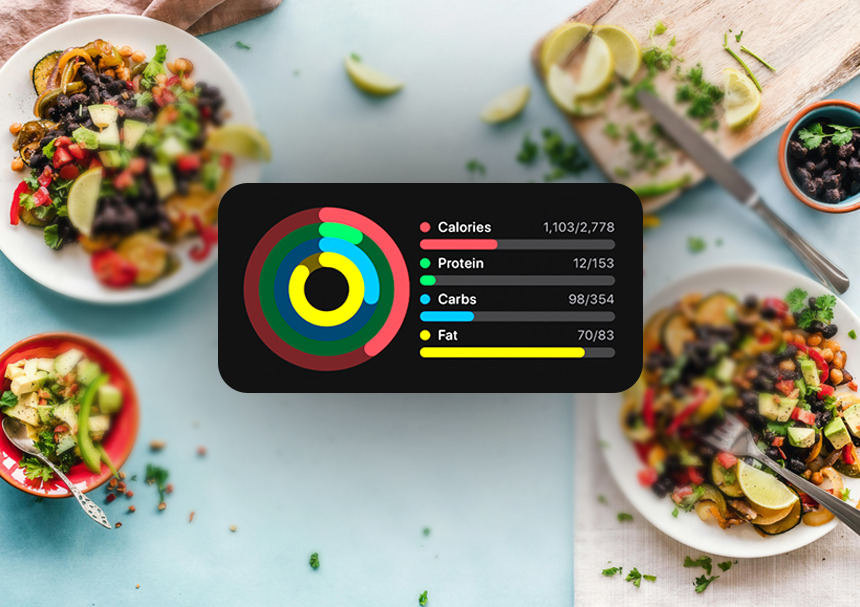
Understanding Calories: The Basics
A calorie is a unit of energy. Specifically, one food calorie (kilocalorie) is the energy needed to raise one kilogram of water by one degree Celsius. Your body uses energy constantly: breathing, circulating blood, moving, thinking, digesting food, and repairing tissue. The total energy your body burns in a day is called your Total Daily Energy Expenditure, or TDEE.
When you eat more calories than your TDEE, the surplus is stored primarily as body fat. When you eat fewer, your body draws on stored fat for energy. This is the fundamental equation of body composition, and no dietary approach, whether keto, intermittent fasting, carnivore, vegan, or paleo, operates outside it. They all work (when they do work) by influencing how many calories you consume, often without you explicitly counting.
The three components of TDEE
Basal Metabolic Rate (BMR): The energy your body needs just to exist: breathing, circulation, organ function, cellular repair. This accounts for 60 to 70 percent of most people's TDEE and is largely determined by body size, composition, age, and sex.
Thermic Effect of Food (TEF): The energy it takes to digest and process food. Protein has the highest TEF at 20 to 30 percent of its caloric value, meaning 100 calories of protein costs 20 to 30 calories just to digest. Carbohydrates cost 5 to 10 percent, fat costs 0 to 3 percent.
Activity: Everything from deliberate exercise to fidgeting and walking to your car. This is the most variable component and the most easily changed through behaviour.
How to Set Up Your Calorie Target
Step 1: Find your TDEE
Use an online TDEE calculator and enter your age, height, weight, and activity level. The result is an estimate, not a perfect measurement, but it gives you a reliable starting point. Treat the first two to three weeks of tracking as a calibration period. Compare what you are eating to your actual weight trend and adjust the target up or down accordingly.
Step 2: Define your goal
Your calorie target depends entirely on what you are trying to achieve:
- Fat loss: Eat 300 to 500 calories below your TDEE. This produces sustainable loss of roughly 0.3 to 0.5kg per week without sacrificing muscle mass, training performance, or hormonal health.
- Muscle building: Eat 200 to 300 calories above your TDEE. A controlled surplus minimises unnecessary fat gain while giving your body the fuel and raw materials for muscle protein synthesis.
- Maintenance or body recomposition: Eat at or within 100 to 150 calories of your TDEE. This is the hardest approach to execute but allows simultaneous fat loss and muscle gain, particularly effective for beginners and returning trainees.
Step 3: Set protein first
Before worrying about carbs or fat, lock in your protein target. Aim for 1.6 to 2.2g per kilogram of bodyweight. This range is most strongly supported by research for muscle retention, recovery, and satiety. Fill remaining calories with carbohydrates and fat in whatever proportion suits your preferences and performance needs.
Start simpler: Forget macros for the first two weeks. Track total calories only. This one change alone produces dramatic improvements in dietary awareness before adding any further complexity.

Choosing and Using a Calorie Counter App
The best calorie counter is the one you will actually use consistently. Key things to look for: a large, accurate food database; barcode scanning; easy portion adjustment; and macro breakdown alongside calorie totals.
The barcode scanning advantage
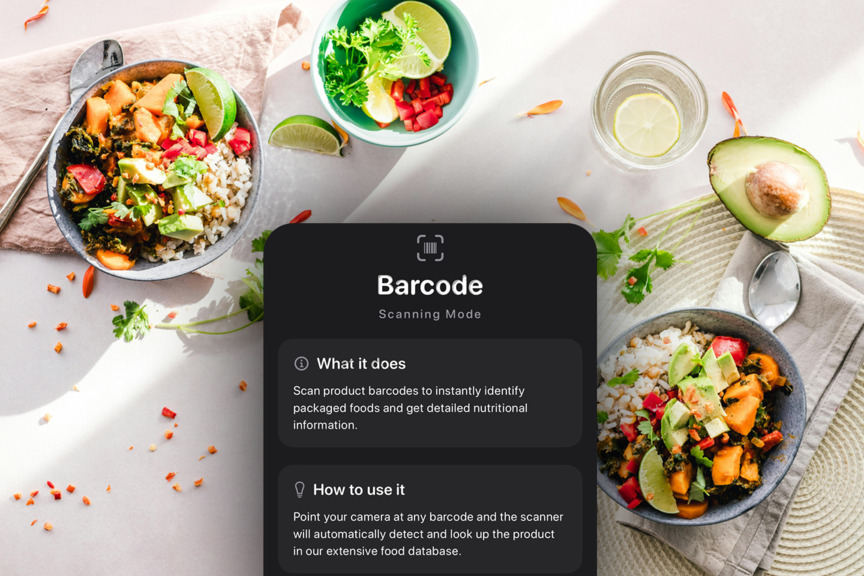
Manually searching for foods is tedious enough that most people stop after a week. Scanning a barcode takes three seconds and pulls exact nutritional data directly from the manufacturer, with no guessing and no sifting through ten different "chicken breast" entries with wildly different calorie values. For packaged foods, barcode scanning is not a convenience feature. It is the difference between tracking and not tracking.
Building your food library
After two weeks of consistent tracking, you will have logged most of the foods you eat regularly. From that point, logging becomes dramatically faster. You are selecting from a personalised library of known foods rather than searching from scratch each time. The initial learning curve is real but short.
Restaurants and homemade meals
These are where tracking gets genuinely difficult. For restaurants, use the closest available database entry and accept some inaccuracy. Consistently approximate tracking produces better results than perfect tracking you abandon after three days. For homemade meals, log ingredients individually as you cook. Once you are used to it this takes about 90 seconds and delivers far better accuracy than guessing the finished dish as a whole.
The Six Mistakes That Make People Quit
1. Tracking only on good days
Tracking only when you are eating well produces biased data and accomplishes very little. The data from your worst days is often the most valuable. It reveals exactly where your problem areas are. Track everything, always, without judgement.
2. Using inaccurate database entries
Food databases contain errors, particularly user-submitted entries. Some are wildly wrong. Cross-reference unfamiliar entries with the actual nutrition label on the product. If something looks obviously off, do not use it.
3. Eyeballing portions instead of weighing
Human portion estimation is notoriously poor. Studies consistently show people underestimate portion sizes by 20 to 50 percent for calorie-dense foods like nuts, oils, cheese, and pasta. A food scale eliminates this entirely. After three to four weeks of regular weighing, your intuitive estimates will be dramatically more accurate. But you have to put in the initial calibration work.
4. Forgetting liquid calories
A large oat milk latte: roughly 240 calories. A glass of orange juice: around 110. Two glasses of wine: approximately 250 calories. A post-workout protein shake blended with a banana and peanut butter: potentially 500 or more. Liquid calories are invisible to most people and frequently account for 400 to 600 untracked calories per day, easily enough to stall fat loss entirely.
5. Quitting after one difficult day
One high-calorie day does not ruin a week of progress. The mathematics simply do not work that way. What actually destroys progress is abandoning tracking entirely after a bad day. The all-or-nothing mindset is the single biggest predictor of long-term failure in any nutrition approach.
6. Setting too aggressive a deficit
A 1,000-calorie deficit feels impressive for three days before hunger, fatigue, and cravings make it unbearable. Muscle loss accelerates, training performance collapses, and the restrictive psychological environment it creates tends to produce significant rebound overeating. A 300 to 500 calorie deficit sustained for months consistently outperforms an aggressive deficit sustained for weeks.
Making Calorie Counting Sustainable Long-Term
The 80/20 approach
You do not need to track every single meal for the rest of your life. Many experienced trackers reach a point where they track 80 percent of meals with full accuracy, estimate familiar foods they have logged hundreds of times, and only apply precise tracking when they have a specific short-term goal. This is a healthy long-term relationship with tracking. A tool used intelligently when needed, not an obsessive obligation.
Building a repertoire of known meals
Having five to ten meals you rotate regularly, meals whose macros and calories you know precisely, removes almost all daily tracking burden. You are not searching and entering. You are selecting a known quantity. Consistent eating patterns make tracking nearly passive.
Tracking context, not just numbers
Add a brief daily note about how you felt: energy levels, hunger, mood, training quality. Over weeks, patterns emerge. You might notice that days below 100g of carbohydrates leave you fatigued during evening training. Or that a high-protein breakfast reduces afternoon snacking almost entirely. These individual insights are often worth more than any generic meal plan.
When to take breaks
Tracking fatigue is real. If you have been tracking consistently for eight to twelve weeks and notice genuine anxiety around food or the app itself, it is completely healthy to take a two-week break at maintenance and eat intuitively. The awareness and portion calibration you have built does not disappear. When you return, you will be more accurate and less burdened by the process.
What to Do With the Data
Many people start tracking and then feel unsure what to do with the information. They know they ate 2,400 calories on Tuesday, but what now?
Look for patterns, not perfection. After one full week of honest tracking, ask: Are you consistently over on calories? On which days? At which meals? Are you hitting your protein target? Are there specific foods contributing a disproportionate share of calories with low satiety in return?
These patterns tell you exactly where to intervene with targeted, specific changes. If you are consistently over calories at dinner, the solution is very different from being consistently over at afternoon snacks. Data enables precision. Guessing produces vague interventions that rarely stick.
The weekly review habit: Every Sunday, spend five minutes looking back at the past week of data. Identify one thing that went well to repeat. Identify one pattern to address. That is the entire review. Small, specific adjustments made consistently over months produce transformations that feel almost effortless in retrospect.
Calories and the Bigger Picture
Calorie tracking is a tool, not a life philosophy. It sits within a broader approach to health that includes sleep quality, movement, stress management, and the overall quality, not just the quantity, of what you eat. Two thousand calories of mostly whole, minimally processed food will look, feel, and perform completely differently in your body than 2,000 calories of ultra-processed food, even if the number on the tracker is identical.
Use a calorie counter to understand your intake, establish a baseline, achieve specific goals, and calibrate your intuition. Then let that calibrated intuition guide day-to-day choices without requiring you to count every morsel indefinitely. The goal was never permanent tracking. The goal was always the knowledge and awareness that makes permanent tracking unnecessary.
Track your progress with The 1% App
Put everything in this article into action. The 1% App helps you build habits, track workouts, and improve 1% every single day.
Download Free →